destiny deacon
MAC.ROB student, 1973
PORTRAIT GALLERY INDUCTEE, 2014
visual artist
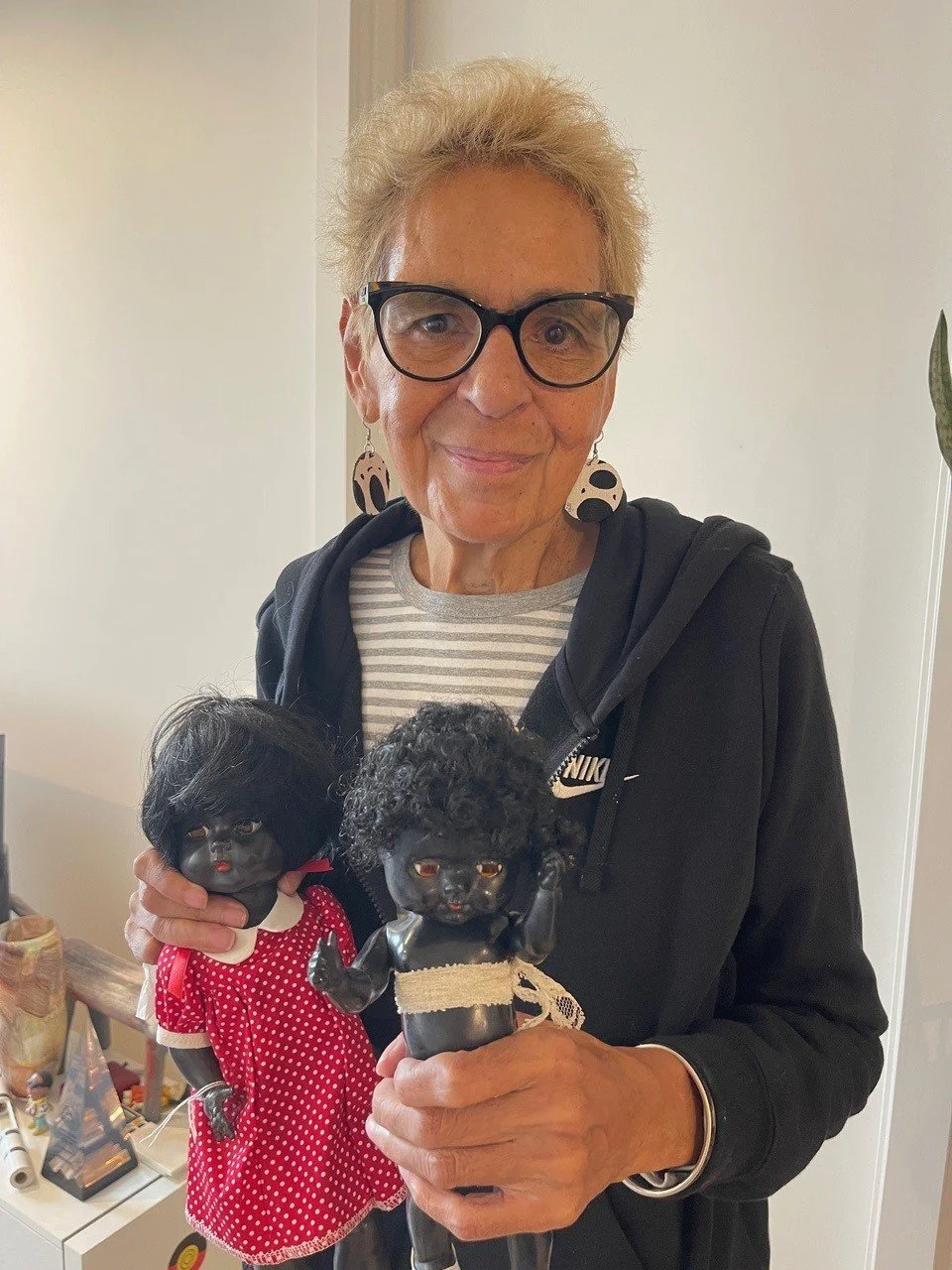
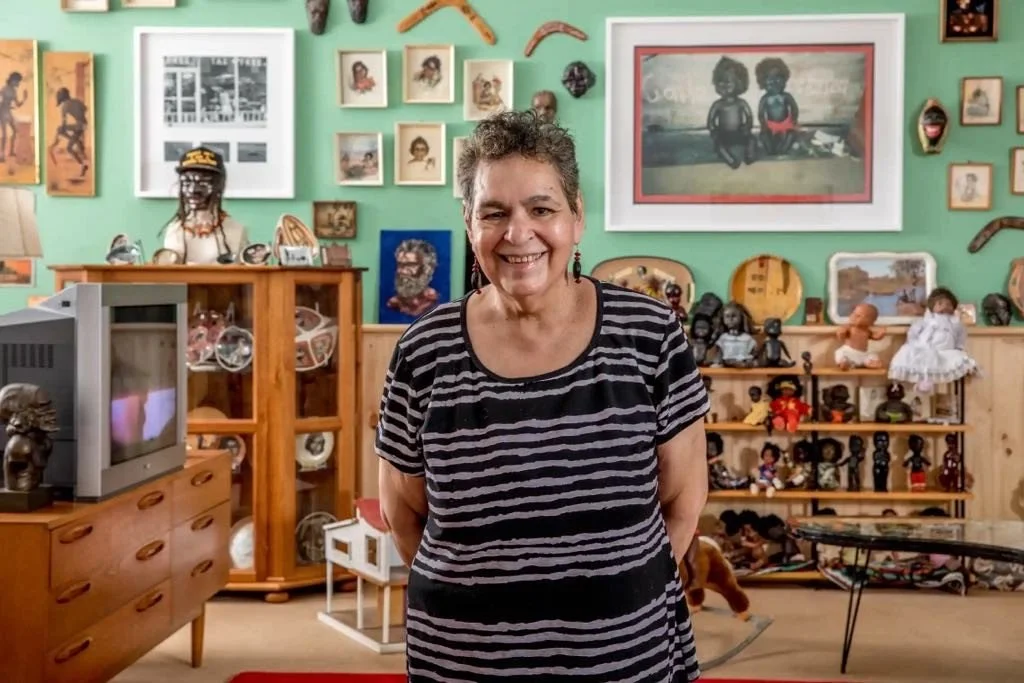
Destiny Deacon (1956-2024) was a renowned Indigenous Australian artist, photographer, videographer and installation artist. Born in Maryborough, Queensland, she was a descendant of the KuKu (Far North Queensland) and Erub/Mer (Torres Strait) peoples. Deacon's work, which began gaining recognition in the 1990s, was known for its provocative and humorous exploration of Indigenous identity.
Deacon's journey to becoming an artist was unconventional. She first pursued a career in education, earning a BA in Politics from the University of Melbourne in 1979 and a Diploma of Education from La Trobe in 1981. She worked as a teacher before turning to art to stimulate public discourse on Indigenous politics.
Her artistic practice primarily involved photography, video and installation work. Deacon's signature style often incorporated dolls, kitsch objects and found materials to create simultaneously playful and unsettling scenes. Her work was partly autobiographical and partly fictitious, using dark humour to address political, Indigenous and feminist concerns.
Deacon's art was widely exhibited both nationally and internationally. Some of her career highlights included:
Participation in the prestigious Documenta 11 in Kassel, Germany (2002)
A major retrospective "Walk & don't look blak" at the Museum of Contemporary Art, Sydney (2004-2005), which later toured internationally
Inclusion in multiple Biennales, including Sydney (2000, 2008, 2024), Johannesburg (1995), Havana (1994, 2009) and Sharjah (2023)
Participation in the inaugural National Indigenous Art Triennial "Culture Warriors" at the National Gallery of Australia (2007).
Her final significant exhibition, “DESTINY”, at the National Gallery of Victoria in 2020, was her largest retrospective, showcasing over 100 works spanning more than 30 years of her career.
Deacon's work is held in most major public collections in Australia, as well as international institutions such as the Museum Moderner Kunst (MUMOK) in Vienna and the Museum Sammlung Essl in Austria.
Throughout her career, Deacon received numerous awards and recognitions, including:
The Deadlys Award for Visual Artist of the Year (2009)
The Yalingwa Fellowship (2018)
The Red Ochre Award for Lifetime Achievement at the Creative Australia First Nations Arts Awards (2022)
The Centenary Medal from the Royal Photographic Society (2022)
The Photography Award of musée du quai Branly Jacques Chirac (2023, posthumously).
Deacon's influence extended beyond her artistic practice. She was a vocal advocate for Indigenous rights and contributed to the broader discourse on Australian identity and race relations. Her work challenged viewers to confront uncomfortable truths about Australia's colonial history and its ongoing impact on Indigenous peoples.
Destiny Deacon remains a significant figure in contemporary Australian art, with her work continuing to be relevant and thought-provoking in ongoing discussions about identity, representation, and the legacy of colonialism in Australia. Her passing in 2024 marked the end of a remarkable career that profoundly influenced the Indigenous Australian art landscape.